


Learn
If there’s one thing we hear more than almost anything else about our avocado oil, it’s some version of the same question: “Isn’t metal going to leach into the oil?”
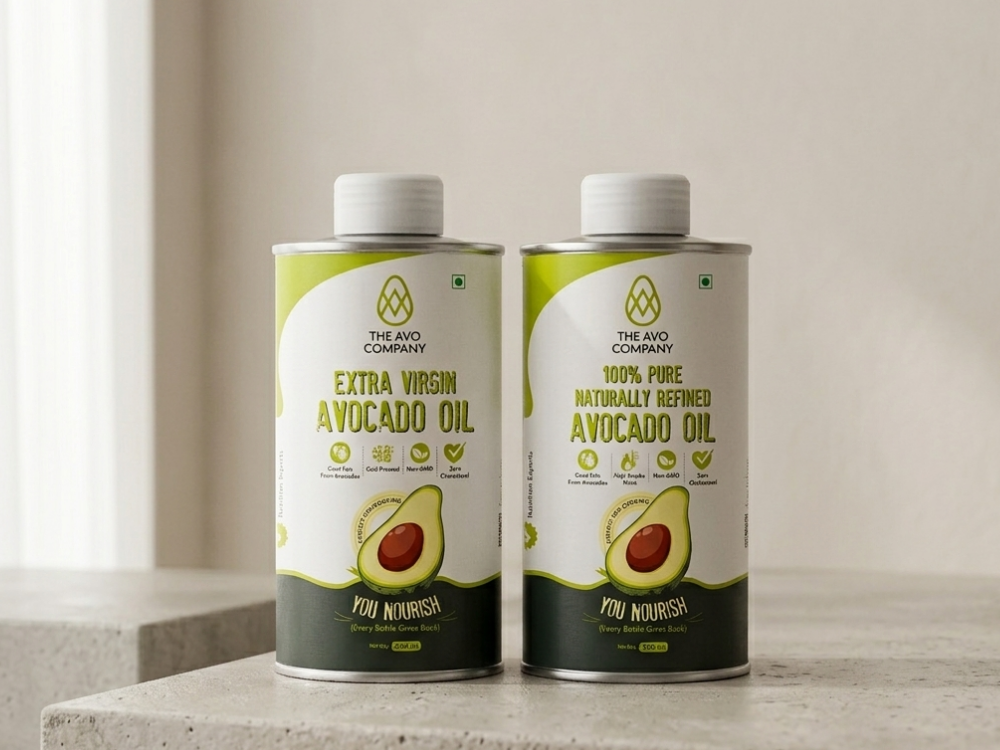
It’s a fair thing to wonder. Most of us grew up assuming metal and food don’t mix well over time, an old rusted can at the back of the pantry does that to a person. So instead of just telling you tin is safe, we did what we do with everything at The Avo Company: we sent it to a lab and asked them to check. Cans from our very first production batch, the same batch many of you already have on your shelf, went to an independent testing facility with one job: tell us the truth, whatever it is.
Here’s what they found.
Why We Picked a Fight With Glass in the First Place
Glass is the “default” for premium oils, and there’s a reason: it looks good and doesn’t react with anything. But it also breaks. In a delivery bag, in transit from our facility to your kitchen, in a cabinet after a long day. We wanted packaging that would survive the real world your kitchen actually lives in.
Tin does that. It also fully blocks light, which glass often doesn’t do as well unless it’s tinted or boxed, and light is one of the biggest enemies of oil quality over time. So the decision made sense on paper. But we don’t think packaging claims should rest on paper alone, which is exactly why this test happened.
The Test: What “Migration” Actually Means
Think of it this way: your tin can is in constant, quiet contact with the oil inside it. Migration testing is the science of asking, over time, does anything move from the can into the oil? Not just metal flecks you could see, but anything at all, down to invisible chemical traces.
To test this properly, labs don’t just pour oil into a can and wait. They use a simulant, in our case n-heptane, which behaves like fat and oil do, and expose it to the can under controlled heat and time. Whatever moves from the can into that simulant gets measured, down to fractions of a milligram, and checked against strict limits set by Indian food regulation.
We sent our cans to SGS India, one of the most recognized independent testing and certification names globally, at their NABL-accredited lab in Gurugram. No shortcuts, no self-certification. A third party with nothing to gain from flattering our packaging.
“Specific Migration of Heavy Metals… Conclusion: Pass.”
— SGS India, Report No. GR:HL:1752000990
What They Found
First, they checked for heavy metals. Eight of them: Barium, Cobalt, Copper, Iron, Lithium, Manganese, Zinc, and Antimony, the metals regulators specifically watch for in food-contact metal packaging, because in poorly made cans, they’re the ones that can transfer into food over time.
Every single one came back Not Detected. Not “within limits.” Not “a trace amount.” Genuinely not detected at all, below the lab’s own detection threshold.
Second, they checked overall migration, a broader test that catches anything at all moving from the can into the oil, not just the eight named metals. Indian food safety regulation allows up to 60 mg/L of migration before it’s a concern. Our cans measured in at under 12 mg/L, roughly a fifth of what’s permitted.
Third, they checked for visible colour migration, whether the can’s inner lining bleeds any colour into the oil over time. The result: no colour release observed at all.
Three tests, three passes.
Heavy metals — all eight, all clear:
| Metal | Result | Permitted Limit (mg/kg) |
|---|---|---|
| Barium | Not Detected | 1 |
| Cobalt | Not Detected | 0.05 |
| Copper | Not Detected | 5 |
| Iron | Not Detected | 48 |
| Lithium | Not Detected | 0.6 |
| Manganese | Not Detected | 0.6 |
| Zinc | Not Detected | 25 |
| Antimony | Not Detected | 0.04 |
Overall migration:
| Result | Permitted Limit |
|---|---|
| Under 12 mg/L | 60 mg/L |
Colour migration:
| Result | Requirement |
|---|---|
| No colour release observed | Should be absent |
All tested under IS 9845:1998 (R 2020) and FSSAI Packaging Regulation 2018 with amendment, the standards Indian regulators use specifically for this kind of packaging safety check.
Want the full SGS lab report in your inbox?
Why We’re Sharing This At All
Most cooking oils in India are never tested batch by batch, let alone shared publicly. Even brands that do test their oil rarely share the actual report. And packaging safety, whether anything leaches from the container into the food inside it, is something we’ve rarely seen shared at all. We think all of that should change, starting with ours.
Because honestly, if we were the customer, that’s the part that would reassure us most. Knowing the oil is good is one thing. Knowing the container it’s been sitting in isn’t quietly doing something to it? That’s the detail most people never get to check. So we’re checking it, and telling you.
This isn’t happening in a vacuum, either. Front-of-pack transparency has become a live conversation in Indian food policy. Regulators have spent years weighing simple, visible ways for shoppers to understand what’s in their food and packaging, and reporting this year has shown how much resistance those proposals have faced from large food and beverage companies pushing back against clearer disclosure. We don’t have a stake in that fight. But it’s part of why we think smaller brands sharing lab data, unprompted, matters more right now, not less.
The Part We’re Actually Proud Of: You Can Check This Yourself
Here’s the thing about lab reports: anyone can talk about them. Fewer brands let you go verify anything against the exact product in your own kitchen.
That’s why we built Know Your Product. Every batch we produce, including the one this migration report covers, gets a batch code you can look up yourself. Try it right now with TEV4501472655 or TNR4501482661 and see the independently verified oil quality data behind your own tin, straight from a NABL-certified lab report.
The tin migration results in this article are from the same batch, tested separately and covered here for now. As we build this out further, we’re working toward folding packaging test data like this directly into Know Your Product too, so everything about your tin, inside and out, lives in one place.
So, Is Tin Better?
We’ll let you draw your own conclusion. What we can tell you: it doesn’t shatter, it fully blocks light, and now, backed by an independent lab, we know it doesn’t transfer heavy metals or colour into the oil, at levels far below what regulation even allows.
That’s not a marketing line. It’s a report you can ask for, verify, and trace back to the exact tin sitting in your kitchen.
Ready to taste oil that’s been tested, not just trusted?
Shop The Avo Company today!
Avocado oil the way it should be.
Kalpesh and The Avo Company Team
Quick Answers
Does oil react with tin packaging?
Independent lab testing on The Avo Company’s tin cans found no detectable migration of heavy metals and no visible colour transfer into the oil, well within Indian food safety limits.
Is tin packaging safe for cooking oil?
Yes, when the can is designed and lined for food contact. Our tin cans passed all three migration tests, heavy metals, overall migration, and colour migration, under FSSAI Packaging Regulation 2018 and IS 9845:1998 (R 2020).
What is migration testing?
It measures whether substances from packaging leach into the food or oil it contains, using a simulant that mimics the food’s behaviour under controlled heat and time.
Who tested The Avo Company’s tin cans?
SGS India Pvt. Ltd., a NABL-accredited laboratory, tested samples from production batches TEV4501472655 and TNR4501482661 at its Gurugram facility.
